
The Reserve at Rye 290 Blog | NW Houston Living, Hwy 290 Commuter Guides & Studio Apartment Tips

What Does All Bills Paid Mean? Rent, Utilities & Internet Explained-image

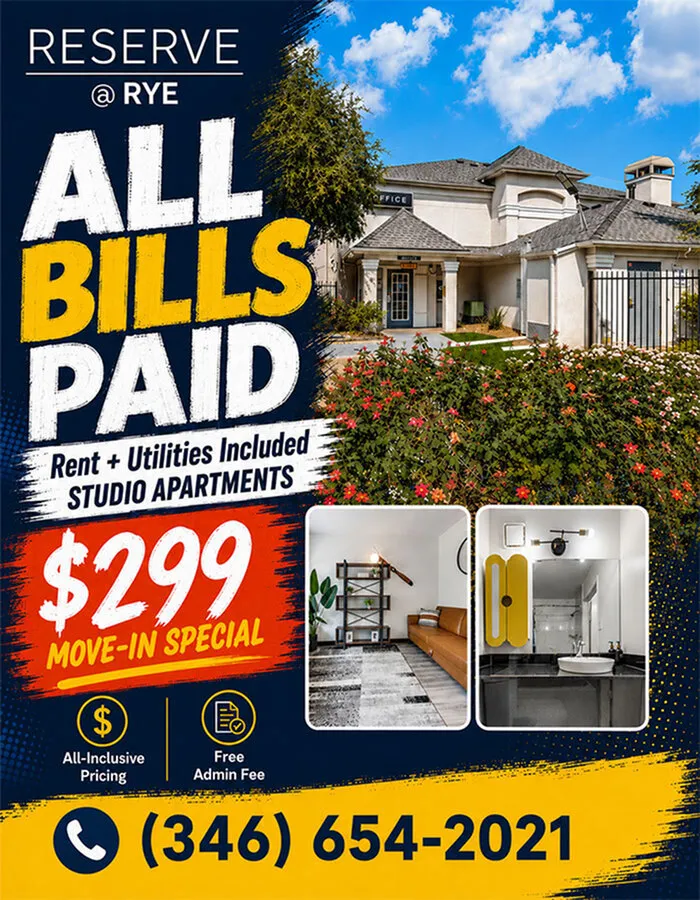
Quick Answer: All bills paid means your landlord bundles utilities into one flat monthly rent, so you don't pay separate electric, water, or gas companies. What does all bills paid mean in practice? You write one payment and the property handles the rest. Coverage varies by lease, so confirm which utilities are actually included before you sign. You spot a listing that says "all bills paid" and the math suddenly looks simple. One payment, no surprise electric bill in August. But what does all bills paid mean once you read the fine print? The answer shapes your budget more than the sticker rent does. At The Reserve at Rye 290, a gated studio community serving Northwest Houston along the US-290 corridor, renters ask this constantly, so here's the plain version. You can browse our studio floor plans to see what a fixed monthly cost looks like in practice. What Does All Bills Paid Mean? All bills paid, also called utilities included, means the property owner pays the utility providers directly and folds that cost into your rent. Instead of opening accounts with an electric company, a water district, and a gas provider, you send one payment. The landlord absorbs the billing, and you get a single predictable number every month. The phrase sounds absolute, but it rarely is. Some communities cover only water, sewer, and trash. Others add electricity and gas. A smaller group throws in internet or cable. No legal standard forces a specific list, which is why two apartments advertising the same phrase can include very different things. Read the lease line by line. If it doesn't name a utility, assume you're paying it. Utilities When Renting: Who Usually Pays In a standard lease, landlords typically cover water, sewer, and trash, while you handle electricity, gas, and internet. Utilities when renting split along those lines because water and trash are billed to the building, not the individual unit. A utilities-included setup simply moves more of that list onto the landlord's side of the ledger. Are Utilities Fixed or Variable When Renting? Rent is a fixed cost. Utilities are usually variable, meaning they rise and fall with how much you use. So are utilities fixed or variable in a utilities-included apartment? They become effectively fixed for you, because the landlord charges one flat rate and takes on the month-to-month swings. Your July AC spike is the property's problem, not yours. That stability is the real product you're buying. A window unit fighting Houston humidity can push a summer electric bill well past the winter figure. As of early 2026, U.S. Energy Information Administration data showed residential electricity averaging about 17.65 cents per kilowatt-hour, up roughly 7 percent from a year earlier. Rates keep climbing. When your rent and utilities are bundled, that increase lands on the landlord first, at least until the lease renews. There's a catch. Landlords don't absorb that risk for free. They estimate the building's typical usage, add a cushion, and bake it into the rent. You trade a lower headline rent for a steadier one. Whether that trade pays off depends on how much you actually use. How to Compare an All Bills Paid Rent Run a quick side-by-side before you sign. Take the bundled rent and subtract what a comparable unit charges without utilities. The gap is roughly what the landlord is billing you for utilities. Then estimate your own habits. A small studio with efficient appliances costs far less to power than a family unit running two window units and a dryer. If your usage is lean, paying separately might win. If you run hot and use a lot, the flat rate often comes out ahead. Do Apartment Complexes Include Utilities in Rent? Some do, some don't, and many land in the middle. Do apartment complexes include utilities as a rule? Larger, professionally managed communities are more likely to bundle water, sewer, and trash than a private single-unit landlord. Full coverage that also includes electricity and gas is less common, and it usually shows up in studios, student housing, or short-term leases. The table below shows the usual pattern. Treat it as a starting point, not a guarantee, since every property draws the line a little differently. Utility Typically Included? What to Know Water & sewer Often Billed to the building, so it's easy to bundle Trash & recycling Often Almost always rolled into rent Electricity Sometimes More common in studios and true all bills paid units Gas & heat Sometimes Depends on climate and how the building is heated Internet & cable Rarely Usually a separate account you set up yourself Bottom line Confirm in the lease The named list is the real list An apartment complex with utilities included tends to keep the essentials on the landlord's tab and leave the discretionary services, internet especially, to you. If a listing promises everything, ask for it in writing. Verbal promises about rent and utilities rarely hold up when the lease says otherwise. Community perks can blur the line too, so check the amenities list against your lease to see what the rent already covers. What About Internet in an All Bills Paid Apartment? Internet is the odd one out. Even in a fully bundled unit, internet and cable are usually excluded, because plans and speeds vary too much to bundle cleanly. A few communities include a basic connection or negotiate a bulk deal with one provider, which can save you money if the speed suits you. Work from home or stream in 4K? Ask about the included tier before assuming it's enough, and budget for an upgrade if it falls short. Frequently Asked Questions 1. Does all bills paid include internet? Usually not. Internet and cable are the utilities most often left off a utilities-included lease, because providers bill per account and per plan. Some communities partner with a provider and include a basic tier, but faster speeds almost always cost extra. Confirm the specific plan before you count on it. 2. Are apartments for rent with utilities a good deal? It depends on your usage and priorities. Apartments for rent with utilities included work best when you value a predictable budget, use average amounts of power, or want to skip deposits and setup. The math tends to favor them when: You run the AC heavily through the summer You're a first-time renter avoiding utility deposits You have limited or no credit history You'd rather make one payment than five You're signing a shorter-term lease 3. Where can I find apts all bills paid near me? Start with listing sites and filter for utilities included, then verify each result against its actual lease. Searching apts all bills paid near me surfaces plenty of options, but the phrase gets used loosely. Call the leasing office and ask exactly which utilities are covered and whether any usage caps apply. 4. Can a landlord charge extra if I use too much? Yes, if the lease allows it. Some bundled-utility agreements set a monthly usage cap and bill you for anything above it. The cap protects the landlord from a tenant running space heaters all winter. Ask whether your lease has a cap, what the limit is, and how overages get calculated before signing. 5. Do I build credit with all bills paid rent? Not from the utilities. Because those accounts sit in the landlord's name, on-time utility payments won't show up on your credit report. If building credit matters to you, weigh that as a small tradeoff. You can still build credit through rent reporting services, a credit card, or other bills in your own name. Making the Call on All Bills Paid So what does all bills paid mean for your search? It means trading a little control, and usually a slightly higher rent, for a single predictable payment and zero utility setup. That's a strong deal for renters who want simplicity, steady budgets, or a clean break from deposits and credit checks. Read the lease, confirm the exact list, and ask about usage caps before you sign. If a fixed monthly cost in a gated Northwest Houston community sounds right, take a look at what The Reserve at Rye 290 offers, then check the neighborhood and directions to see how the US-290 location fits your commute.

Read more
Apartment Parking Setups Compared: A Simple Guide-image

Quick Answer: Apartment parking setups fall into a few main types: surface lots, covered carports, multifloor garages, and tandem spaces. The right apartment parking setup depends on your budget, your car, and how often you drive. Surface lots cost the least, while structured garages add security and weather protection for a higher monthly fee. Parking shapes daily life at any community, yet most renters never think about it until move-in day. Apartment parking setups vary widely from one property to the next, and those differences hit your monthly cost, your commute, and even your car's paint. The Reserve at Rye 290 is a gated community serving Northwest Houston along the US-290 corridor , where on-site parking is part of the appeal. Here is how the common configurations stack up. What to Look For in Apartment Parking Setups Apartment parking setups boil down to four questions. Is the space covered? Is it assigned to you? Does it cost extra each month? And can you reach your car without moving someone else's first? Answer those four and everything else is detail. The sections below break down each layout and what it means for a renter's wallet and routine. How Do Surface Parking Lots and Multifloor Parking Compare? Surface parking lots are open, striped lots at ground level, the most common option at garden-style communities. Multifloor parking stacks spaces across decks or below grade instead. Surface lots cost less and let you spot your car from the unit. Multifloor garages fit more vehicles on less land and shield those cars from sun and storms. Cost is the big divider. According to DBS Group construction estimates, a surface stall runs roughly $1,500 to $3,000 to build when site prep is minimal, while an underground space can climb to $25,000 to $50,000. As much as 70% of a parking garage's price sits in its structural system. Those figures never appear on your lease, but they explain why covered and structured parking almost always carry a fee. Multifloor parking earns its keep where land is scarce. You trade a short ramp climb for a covered, usually gated space. Surface lots win on price and quick access. Live somewhere with brutal summers, like Houston, and covered parking pays you back in a cooler cabin and slower paint fade. Parking Setup Typical Monthly Cost Best For Watch Out For Surface lot Often included or low fee Budget and easy access No weather protection Covered carport Modest add-on Sun and hail protection Open sides, limited security Multifloor garage Higher monthly fee Security and climate shelter Ramps and tighter spaces Tandem space Often shared or discounted Two-car households One car blocks the other Tandem Parking and Smart Parking Solutions for Apartments Tandem parking puts two cars end to end in one long space, so the rear car cannot leave until the front one moves. A standard two-car tandem space measures about 9 feet wide and 36 feet long. It is a space-saving favorite in dense cities and townhome communities, and it works best when the people sharing it keep predictable schedules. The tradeoff is coordination. When schedules clash, someone gets blocked in, and minor scrapes between neighbors' cars happen more than you would expect. Communities cut that friction with clear assignments and written rules. Other parking solutions for apartments include reserved single spaces, gated garages, and electric-vehicle charging stalls, which more properties add every year. You can see how parking fits alongside the rest of a community's perks on the community amenities page . How Apartment Parking Permits Keep Lots Organized Apartment parking permits tell management which cars belong and which do not. The old approach relied on hang tags and window decals. Plenty of communities have moved to digital permits tied to your license plate, often handled through the same resident portal that processes rent and maintenance. Plate-reading software can flag an unregistered vehicle without a single sticker on the glass. Programs differ by property. Aya apartments resident parking, for instance, includes on-site spaces and a community garage, a setup that shows how modern communities fold parking into the resident experience rather than treating it as an afterthought. Digital permit tools often pull resident lists straight from property software like Entrata, which keeps the lot accurate as people move in and out. Federal rules shape every lot too. The Americans with Disabilities Act sets minimum accessible-space counts, and at least one of every six accessible spaces must be van accessible. Those counts are figured for each lot or garage on a property, not the site as a whole. You can read the full standards on the U.S. Department of Justice ADA parking page . Frequently Asked Questions 1. What is the most common apartment parking setup? The surface lot is the most common apartment parking setup, especially at garden-style communities. It is an open, striped lot at ground level with no cover. Surface parking lots keep costs down and let you keep an eye on your car, though they leave it exposed to weather. Many properties offer covered or garage upgrades for an added fee. 2. Does covered or multifloor parking cost extra? Usually, yes. Surface spaces are often included in rent, while covered carports and multifloor parking add a monthly charge. The fee reflects the higher cost to build and maintain a structure. As of June 2026, the gap can range from a small carport add-on to a steeper garage rate, so confirm the exact figure with the leasing office before signing. 3. How do you make tandem parking work with a roommate? Tandem parking runs smoothly when both people plan ahead. A few habits prevent most blocked-in mornings: Agree on a parking order based on who leaves earlier each day. Swap the front and back positions monthly if both cars get equal use. Trade keys or contact info for the rare early or late departure. Get the assigned spot and the shared rules written into your lease. 4. Do apartments require a parking permit? Most communities require some form of registration. Apartment parking permits, whether a physical decal or a digital plate registration, confirm that a vehicle belongs in the lot. They help management spot unauthorized cars and keep resident spaces open. Expect to register each vehicle and any frequent guests when you move in, usually through the leasing office or resident portal. 5. Are apartment communities required to offer accessible parking? Yes. Under the Americans with Disabilities Act, communities that provide parking must include accessible spaces, with the required number based on each lot or garage. At least one of every six accessible spaces must be van accessible, and the spaces must sit on the shortest route to an accessible entrance. The federal standards apply to both surface lots and structured garages. Conclusion The best apartment parking setups match how you actually live. A surface lot suits the renter who wants the lowest cost and the shortest walk to the door. A multifloor garage rewards anyone who values shelter and security. Tandem spaces fit two-car households with synced routines. Before you sign, ask what is included, what costs extra, and where your guests will park. At The Reserve at Rye 290, parking comes built into a gated community near US-290. Browse the studio and efficiency floor plans and check the neighborhood map and directions to picture your daily drive.

Read more
How to Negotiate Your Apartment Lease and Save Money-image

Quick Answer: To negotiate your apartment lease, gather local rent comparables, document your record as a reliable tenant, and start the conversation 30 to 90 days before renewal. Yes, rent is often negotiable, especially in a softer market. Lead with numbers, stay professional, and get any agreement in writing. Rent is the largest line in most household budgets, so learning to negotiate your apartment lease can put real money back in your pocket every month. Here is the encouraging part for 2026: Houston renters hold more leverage than they did a year ago. Anyone weighing a move can review current studio and efficiency floor plans at The Reserve at Rye 290 before a single word about price comes up. What It Means to Negotiate Your Apartment Lease Negotiating your apartment lease means asking your landlord or property manager to adjust the rent, fees, or terms before you sign or renew. It covers far more than the monthly number. Lease negotiations can touch deposits, parking, pet fees, lease length, and small upgrades, each of which changes what you actually pay over a year. The savings add up faster than people expect. A rent discount of $75 a month is $900 across a twelve-month term. Landlords understand this math too. Turning over a unit costs them advertising, cleaning, fresh paint, and weeks of empty days, so keeping a dependable tenant is frequently cheaper than chasing a new one. That gap is your leverage, and a good negotiation simply makes the cheaper choice obvious for both sides. Can Rent Be Negotiated, and When Should You Ask? Can rent be negotiated? In most cases, yes, though success depends on your local market and how appealing you look as a tenant. Timing matters most. Reach out 30 to 90 days before your lease ends, while the office still has time to make a deal and you still have time to compare other places. Market data strengthens your case. As of June 2026, RentCafe pegged the average Houston apartment rent at about $1,345, down roughly 1.2% from a year earlier, with studios near $1,004. Other trackers report higher citywide figures, so published averages do vary by source. The broader Houston market softened in early 2026 as new construction came online, and many property managers leaned on concessions instead of rent hikes. That shift hands renters real bargaining room. Season plays a part as well. Demand cools in late fall and winter, which means a request made in December often gets a warmer reception than the same ask during the spring rush. Empty units earn the owner nothing, so a building with several vacancies is a building ready to talk. Reasons for Rent Reduction That Work The strongest reasons for rent reduction are concrete, not emotional. Build your ask around evidence the office can verify: A clean payment history with no late payments or noise complaints. A long tenancy the property would rather keep than replace. The rent differential between your unit and comparable nearby listings. A willingness to sign a longer term, such as 18 or 24 months. Paying several months of rent upfront, if your budget allows it. How to Negotiate Rent Increase Notices at Renewal When a renewal notice arrives with a higher number, do not accept it on reflex. To negotiate rent increase letters effectively, respond in writing, acknowledge the notice, and counter with comparables plus your track record. Even if the office holds firm on base rent, you can often trade part of the increase for waived fees, a small upgrade, or a repair you have been waiting on. Stay calm and specific. A short, friendly note that says "I want to renew, here are three nearby units priced lower, and I have paid on time every month" lands better than frustration ever will. The table below shows what is realistic to put on the table. Your Ask What It Can Save When It Works Best Lower base rent $25 to $150+ per month Soft market, strong tenant history Longer lease term A smaller or zero increase Landlord wants to avoid turnover Waived or reduced fees $20 to $75 per month Parking, pet, or amenity fees you can trim One free month or concession Roughly 8% off the year Several vacant units in the building Combine two small asks The largest realistic savings Almost any renewal conversation Negotiating Lease Renewal Step by Step Negotiating lease renewal goes smoother with a plan: Research three to five comparable units and note the rent differential. List your strengths as a tenant in plain, honest bullet points. Send a short letter rent reduction request that states your number and your reasons. Weigh the amenities you actually use against any fees you pay for ones you do not. Factor in the neighborhood and commute so your final figure reflects real value, then confirm any agreement in writing before you sign. Knowing your rights also helps you negotiate from steadier ground. For a plain-language overview of renter protections and where to turn if a dispute comes up, the federal government's tenant rights resource is a solid starting point. Frequently Asked Questions 1. Can you negotiate rent on a lease renewal? Yes. Renewal is often the best moment, because keeping a reliable resident usually costs the property less than finding a new one. Open the conversation 30 to 60 days out, bring comparable rents, and ask plainly whether the rate can stay flat or rise less than proposed. 2. What should I say to negotiate a rent increase? Keep it factual and friendly. A simple script does the work: "I would like to renew and stay here." "Similar units nearby are listed for less." "I have paid on time every month." "Can we hold the rent flat, or lower the increase?" 3. Is it better to negotiate rent by email or in person? Start in writing. An email or brief letter gives both sides a clear record of what was asked and offered, which protects you later. You can always follow up with a friendly call or office visit once your written request is on file and the manager has had time to review it. 4. How much of a rent discount can I realistically ask for? In a soft market, a 5% to 10% adjustment is a reasonable opening ask, though many renters land closer to a held-flat rate or a modest rent discount. Lead with comparables. A number backed by nearby listings is far harder to wave off than a round guess. 5. What if my landlord says no? Stay professional and ask about alternatives, such as waived fees, a free month, or a longer term at a better rate. If the answer is still no and comparable homes cost less, you have the information you need to decide whether to renew, counter again, or move on. Conclusion You have more room than you think to negotiate your apartment lease, especially in a Houston market that has tilted toward renters in 2026. Do your homework, lead with numbers, and keep the tone respectful, and you will often walk away with a better deal or at least a smaller increase. Want to compare your options first? Explore The Reserve at Rye 290 in Northwest Houston and see how the value stacks up before you sit down to talk.

Read more
How Apartment Lease Renewals Work: A Stress-Free Guide-image

Quick Answer: Apartment lease renewals let you stay in your current home for a new term once your original lease ends. The renewal process usually starts with a notice from your property manager 30 to 90 days out, an offer that lists the new rent, and a lease renewal form you sign to lock in your spot. Your lease is winding down, and a renewal offer just landed in your inbox. Apartment lease renewals are how renters keep their home without the hassle of moving, and the steps are simpler than they look. The Reserve at Rye 290 serves renters along the US-290 corridor with gated studio apartments in Northwest Houston , so here's a clear walk-through of how the process works from notice to signature. What Are Apartment Lease Renewals? A lease renewal is a fresh agreement that continues your tenancy after the current lease expires, usually for another six or twelve months. Most apartment lease renewals keep the core terms of your original lease, then update a few items like rent or policies. Both you and the property must agree and sign before it takes effect. Think of a lease agreement renewal as a reset button rather than a brand-new start: the rental history stays, the dates move forward. One thing to know up front. Outside of specific tenant-protection rules, a property isn't always required to offer a renewal, so it's worth confirming your community's policy early. When an offer does come, you'll have a defined window to respond before terms lock in. How Does the Apartment Lease Renewal Process Work? The process runs on a timeline. As of June 2026, RentCafe reports that renewal notices commonly arrive 30 to 90 days before a lease ends, with many property managers sending them 60 to 90 days out. You review the offer, decide whether to negotiate, then sign. Miss the deadline and your lease may roll into month-to-month. Understanding Your Lease Renewal Notice Your lease renewal notice is the formal letter that kicks things off. A complete one names the property and both parties, states the current expiration date, and spells out the proposed new term, rent, and any policy changes. It should be in writing, and you'll usually have a set window to respond. Read the rent figure closely, since a small percentage bump adds up over a year. What the Renewal Rate Means The renewal rate is the rent amount your property offers for the next term. It often differs from what a brand-new resident would pay, and it isn't always higher. This is the number to compare against current market rents before you decide. If the renewal rate feels steep, ask whether a longer term or a different layout changes the math. Browsing the current available floor plans gives you a quick reality check on local pricing. Signing the Lease Renewal Form Once you accept, you finalize the lease renewal form. This document records the new dates, the agreed rent, and any updated rules, and it carries the same legal weight as your first lease. Sign it before the deadline in your notice. Keep a copy for your records, along with the original notice and any emails, in case a question comes up later. Lease Extension vs Renewal: What's the Difference? People use the terms interchangeably, but they aren't the same. A renewal creates a new lease agreement, often with a new term and possibly new rent. A lease agreement extension simply continues your existing lease, usually for a shorter, temporary stretch under the same terms. Knowing the difference helps you pick what fits. A lease extension contract is handy when you need a few more months rather than a full year, say while you finish a home search or wait on a job decision. Here's how the two stack up: Feature Lease Renewal Lease Extension New document? Yes, a new lease agreement No, an addendum to the current lease Typical length 6 to 12 months Often 1 to 6 months, sometimes month-to-month Can terms change? Yes, rent, policies, and length can be revised Usually no, the same terms continue Paperwork A full lease renewal form A short lease extension contract or addendum Best for Staying long term with updated terms A short, temporary stay Texas keeps things light on regulation. The state sets no statewide cap on how much rent can rise at renewal, and rent can only change when a lease renews or a new term begins, not mid-lease. For a plain-language rundown of renter protections, the Texas Attorney General's renter's rights page is a solid official reference. Either way, your signed lease and notice control the specifics, so read them first. Frequently Asked Questions 1. When should I expect my apartment lease renewal offer? Most renters hear from their property manager 30 to 90 days before the lease ends, and many communities send offers 60 to 90 days out. Watch your email and resident portal as that window opens. Earlier notice gives you more room to compare options or negotiate before you commit. 2. What happens if I don't respond to a lease renewal notice? If you let the response deadline pass and stay put, many leases convert to month-to-month. That status often lets the property raise rent or end the tenancy on shorter notice, and you lose the price protection of a fixed term. Responding on time keeps you in control of the outcome. 3. Can I negotiate the renewal rate? Yes. A renewal offer is a starting point, not a final word. You can ask about a lower renewal rate, a longer term, a different unit, or a few added perks. Bring current market numbers to the conversation, and start early so you have leverage before the unit gets marketed. 4. What's included in a lease renewal form? A clear lease renewal form spells out the essentials so nothing is left to guesswork: The property address and the names of all parties The new lease term with start and end dates The agreed rent, including any increase Any updated rules, fees, or policies Signature lines for you and the property 5. Is a lease extension or renewal better for a short stay? For a short, temporary stay, a lease extension usually wins. It keeps your current terms and skips a full new agreement, which is simpler when you need only a few extra months. For a longer commitment with updated terms, a standard renewal is the better fit. Renewing Your Apartment Lease With Confidence Apartment lease renewals don't have to be stressful once you know the rhythm: a notice arrives, you review the rent and terms, you negotiate if needed, then you sign. Read every line, mind the deadline, and keep your paperwork. If you're weighing a renewal at The Reserve at Rye 290, take a fresh look at the community amenities and the neighborhood and directions before you decide. A few minutes of review now protects your home and your budget for the year ahead.

Read more
West Houston Studio Apartment Options for Renters-image

Quick Answer: A West Houston studio apartment is a single-room home that blends living, sleeping, and kitchen space into one efficient layout, made for solo renters who value location over square footage. Most West Houston studio apartments rent below the local one-bedroom average, with Houston studios sitting near $1,004 a month as of June 2026. A West Houston studio apartment puts a private, low-maintenance home in one of Houston's fastest-growing corridors, usually for a few hundred dollars less than a one-bedroom. The Reserve at Rye 290 offers gated studio and efficiency floor plans serving Northwest Houston and the US-290 corridor, so you can live close to work without overspending. Here's how to compare your options and what current pricing actually looks like. What to Look For in West Houston Studio Apartments for Rent Smart renters weigh four things: total monthly cost with utilities, the floor plan, the neighborhood, and on-site amenities. Studio apartments for rent in West Houston range widely in price and quality, so compare cost per square foot instead of the headline rent alone. A well-run, gated community usually beats a slightly cheaper unit that piles on fees later. Tour in person when you can. Photos rarely show how a layout really lives. Read the lease line by line before you fall in love with a floor plan. Application fees, admin charges, pet rent, and parking can add $50 to $150 to your real monthly cost, which shifts the math when two studios look similar on paper. Ask whether water, trash, or internet are included, because a slightly higher rent that bundles utilities often beats a lower number that leaves you guessing each month. Amenities That Make a Small Space Work Square footage is tight in any studio, so shared amenities do real work. Look for in-unit or on-site laundry, secure parking, and a fitness center that saves you a separate gym membership. You can review the full community amenities before you schedule a tour. Gated, controlled access for added security and quieter grounds In-unit washer and dryer, or a clean on-site laundry center Reserved or covered parking close to your building A pool, courtyard, or fitness room you will actually use How Much Are Studio Apartments in Houston? Pricing moves fast. As of June 2026, RentCafe market data put the average Houston studio near $1,004 a month at roughly 508 square feet, while the citywide average across all unit types sat around $1,345. Numbers vary by source, so treat any single figure as a starting point and confirm live pricing before you sign a lease. Here is how Houston rents stack up by unit type, based on June 2026 market data. Most studio apartments Houston renters tour will land in or near the studio range below: Apartment type Average monthly rent Typical size Studio $1,004 ~508 sq ft One-bedroom $1,190 ~731 sq ft Two-bedroom $1,508 ~1,054 sq ft Citywide average (all types) $1,345 Varies West Houston draws renters who work along the Energy Corridor and Beltway 8. Westchase and CityWest sit just south, where city west apartments put you near major employers, while the city apartments closest to Beltway 8 and US-290 tend to lease fastest. Plenty of renters compare a studio and apartments with a separate bedroom side by side before deciding the smaller footprint fits their budget and daily routine. Worth knowing: Houston rents have softened slightly over the past year as new construction added supply, which means more move-in concessions and stronger negotiating room for renters in 2026. Where to Find Cheap Studio Apartments for Rent Near You Lower rent usually comes down to timing and location. Renters who type studios near me cheap into a search engine are typically after the lowest base rent with the fewest add-on fees. When you hunt for cheap studio apartments for rent in West Houston, focus on move-in specials, shorter commutes that trim gas costs, and communities that bundle some utilities. The federal government's Fair Market Rent data for the Houston metro gives you a neutral benchmark for what a fair zero-bedroom rent should look like. Studio Efficiency Apartments Houston Renters Should Compare The terms overlap, but there is a real difference. A studio usually includes a full kitchen with a standard stove, oven, and refrigerator, while an efficiency leans on a compact kitchenette. The best studio efficiency apartments Houston has to offer give you flexibility: pick the layout and kitchen setup that match how often you actually cook. Efficiencies tend to run a little smaller and sometimes a little cheaper, though the gap is often modest. If you cook most nights, the full kitchen in a studio earns its keep. If you eat out or keep meals simple, an efficiency stretches your dollar further. Tour both layouts, then check the neighborhood and directions so the commute fits your real schedule, not just the map. A studio that saves $40 a month but adds 20 minutes each way rarely pays off once you count gas and time. Frequently Asked Questions 1. How much are studio apartments for rent in West Houston? Most West Houston studios fall below the one-bedroom average. As of June 2026, RentCafe pegged the typical Houston studio near $1,004 a month, though figures from Rent.com and Zumper run higher, closer to $1,100 and $1,370. Your final rent depends on size, amenities, and any current move-in specials. 2. What's the difference between an efficiency apt for rent and a studio? Both are single-room homes, but the kitchen sets them apart. An efficiency apt for rent typically offers: A kitchenette with a mini-fridge, microwave, and two-burner cooktop Slightly smaller overall square footage A more compact bathroom in some layouts Sometimes a lower price than a comparable studio A studio, by contrast, usually includes a full-size kitchen and a bit more room to arrange your furniture. 3. Are there studios near me that are move-in ready? Yes. The Reserve at Rye 290 keeps gated studio and efficiency units available through much of the year, with openings shifting as leases turn over. Check current availability on the community homepage and ask the leasing team about any specials before you commit. 4. Can I find cheap studio apartments for rent near major job centers? Often, yes. Northwest Houston along US-290 sits within a reasonable drive of the Energy Corridor, the Galleria, and Beltway 8 employers, so you can land affordable rent without a punishing commute. Compare base rent, parking, and utility costs together to find your true monthly total. 5. Is a studio big enough to live in long term? For a single renter, usually yes. Houston studios average around 508 square feet, which is enough for a comfortable bed, a small living zone, and a work-from-home corner. Smart storage and dual-purpose furniture make the space feel larger than the number suggests. A wall-mounted desk, a bed with drawers underneath, and a few vertical shelves can turn a tight studio into a home you are happy to stay in for years. Find Your West Houston Studio Apartment A West Houston studio apartment is one of the most practical ways to live near major job centers in Northwest Houston without overspending. Weigh total monthly cost, kitchen style, and amenities, then tour a few layouts in person. The Reserve at Rye 290 offers gated studio and efficiency homes along the US-290 corridor, so you can settle into a space that fits both your budget and your daily routine.

Read more
Houston vs. San Antonio Apartment Cost: Smart 2026 Guide-image

Quick Answer: The Houston vs. San Antonio apartment cost gap is narrower than most renters expect in 2026. Houston apartments average about $1,345 a month, while San Antonio lands in a similar $1,340 to $1,361 range. San Antonio's bigger savings show up in utilities, groceries, and home prices, not so much in apartment rent itself. Picking between two big Texas cities usually comes down to one question: what will the rent actually cost you? When renters weigh Houston vs. San Antonio apartment cost, they assume San Antonio is dramatically cheaper. The 2026 numbers tell a more interesting story. Both cities offer some of the best value among large U.S. metros, and the smarter move is knowing exactly where each one wins. Serving Northwest Houston near the 290 corridor, communities like The Reserve at Rye 290 show how competitive Houston rents have stayed. What to Look For When Comparing Houston vs. San Antonio Apartment Cost Apartment rent is only the headline number. The full Houston vs. San Antonio apartment cost picture includes utilities, groceries, property tax exposure baked into rent, commute distance, and how far your paycheck stretches once the lease is signed. Look past the advertised rent and compare the whole monthly stack. Cost of living in San Antonio TX vs. Houston The cost of living in San Antonio TX runs a few points below Houston on most indexes. One 2026 comparison put San Antonio's overall index at 84 against Houston's 91, with the national baseline set at 100. Another monthly tracker showed Houston at 97 and San Antonio at 93. The exact spread depends on the source, but the direction holds: San Antonio is slightly cheaper overall, and the gap is widest in housing and utilities. CPS Energy's municipal rate structure and H-E-B's local grocery pricing are two real reasons San Antonio trims everyday living expenses. Distance matters: miles from San Antonio to Houston The two cities sit roughly 200 miles apart. The drive covering the miles from San Antonio to Houston runs about three hours along I-10, passing through Seguin, Luling, and Columbus. Direct flights take under an hour. That proximity is why some Texas households split the difference, renting in lower-cost San Antonio while one earner commutes toward Houston's bigger paychecks. The short hop from Houston TX to San Antonio TX makes either city a realistic home base. How Much Cheaper Is San Antonio Than Houston for Renters? Honestly, at the apartment level, not much. San Antonio's advertised one-bedroom rents do tend to come in lower, often around $1,050 to $1,355 depending on the source and neighborhood, versus roughly $1,190 to $1,200 in Houston. But once you average all unit types together, the two cities land within a few dollars of each other in 2026. The savings story is more about home prices and utilities than rent. Here is a snapshot of average apartment rent in both cities. Houston figures come from RentCafe's June 2026 market data. San Antonio figures are shown as ranges because published averages vary widely by provider. Unit type Houston avg rent San Antonio avg rent Where the edge sits Studio $1,004 ~$985 to $1,167 Roughly even 1-bedroom $1,190 ~$1,050 to $1,355 San Antonio, slightly 2-bedroom $1,508 ~$1,186 to $1,591 Varies by neighborhood Overall average $1,345 ~$1,340 to $1,361 Nearly identical This is the detail most cost living comparison cities articles skip. The popular "San Antonio is way cheaper" claim holds for buying a home, where San Antonio's median price sits roughly 8% to 12% below Houston's. For renters comparing apartments specifically, the two are close enough that neighborhood choice matters more than city choice. Houston rents actually softened about 1.2% over the past year. San Antonio cooled too, dropping a few percent depending on the tracker. Both markets favor renters in 2026, with concessions like one to two months free showing up on many 12-month leases. The Reserve at Rye 290 floor plans and community amenities are worth checking against San Antonio listings before you decide. The right Houston community can match or beat San Antonio pricing on comparable units. Does Lower Rent Mean a Better Salary Comparison by City? Rent only tells half the story. A real salary comparison by city weighs what you earn against what you spend, and on that measure the two Texas metros are remarkably even in 2026. When you compare living expenses side by side, Houston's slightly higher pay tends to cancel out San Antonio's slightly lower costs. San Antonio average income vs. Houston According to U.S. Census Bureau ACS 2024 one-year estimates, the San Antonio average income, measured as median household income, was about $66,176. Houston's came in slightly lower at roughly $64,361. Per capita income tilts the other way: Houston's $42,181 beats San Antonio's $35,099, reflecting Houston's deeper base of high-paying energy, medical, and corporate jobs. So San Antonio households earn a touch more at the median while paying a touch less to live, which boosts purchasing power. Houston offers more high-earning career paths if you want headroom to grow. Neither city has a runaway advantage. Run your own numbers, because the cost living comparison cities tools online can only get you a starting estimate. Your commute, household size, and neighborhood will move the result more than any city average. Frequently Asked Questions Is it cheaper to rent an apartment in San Antonio or Houston in 2026? Apartment rents are nearly identical in 2026, with both cities averaging around $1,340 to $1,360 a month across all unit types. San Antonio holds a small edge on one-bedrooms, but Houston's wider inventory often produces comparable or lower deals depending on neighborhood and current lease concessions. How far is Houston TX to San Antonio TX? The two cities are roughly 200 miles apart, about a three-hour drive along Interstate 10. Direct flights take under an hour, and the corridor passes through Seguin, Luling, and Columbus. The short distance makes weekend trips, medical visits, and split-city commuting genuinely practical for many Texas households. What makes San Antonio's cost of living lower than Houston's? San Antonio's savings come mostly from non-rent categories. Key drivers include: Lower median home prices, roughly 8% to 12% below Houston Cheaper utilities through CPS Energy's municipal rates Competitive grocery pricing led by locally based H-E-B Slightly lower overall cost of living index, near 84 to 93 versus Houston's 91 to 97 Which city has better job opportunities, Houston or San Antonio? Houston has the deeper job market by a wide margin. Its economy spans energy, the Texas Medical Center, aerospace through NASA, port operations, and a large corporate base. San Antonio's economy is more concentrated in military, healthcare, cybersecurity, and tourism. If career breadth and higher earning ceilings matter most, Houston wins. Do property taxes make Houston or San Antonio cheaper overall? It depends on what you buy. Harris County's effective property tax rate, around 1.77%, runs slightly below Bexar County's roughly 2.00%. But San Antonio's lower home values usually produce a smaller total tax bill in actual dollars. For renters, this difference shows up indirectly through the rent landlords charge rather than a separate bill. Conclusion The Houston vs. San Antonio apartment cost decision is closer to a tie than the internet suggests. San Antonio wins on utilities, groceries, and buying a home, while Houston counters with deeper job options and apartment rents that hold their own. With only about 200 miles between Houston TX and San Antonio TX, you can shop both markets before committing. Compare the full monthly stack, tour a few Houston communities like the Rye 290 neighborhood , and let real numbers, not assumptions, pick your city.

Read more