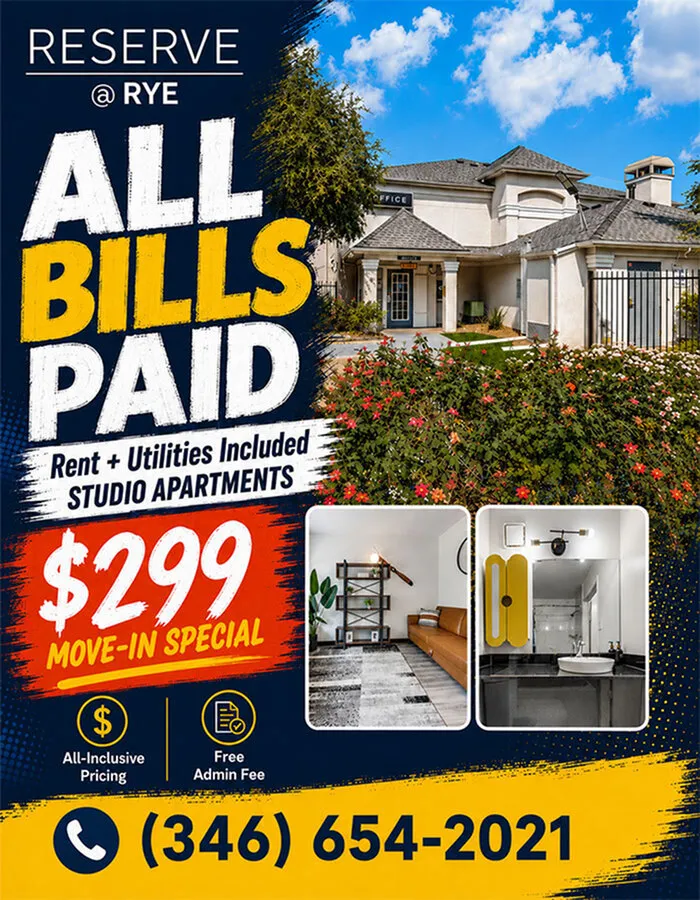
Quick Answer: Gated studio communities vs. traditional apartments usually favors the gated studio over a full lease term. A studio keeps base rent low, and a gated community that bundles utilities, security, parking, and amenities into one payment often beats a cheaper traditional unit once you add up gym memberships, higher utility bills, and separate add-on fees.
Rent is the biggest line item in most budgets, so the choice between a gated studio community and a standard rental is really a math question. Gated studio communities vs. traditional apartments comes down to what your monthly rent actually covers: square footage, utilities, security, and shared amenities. At The Reserve at Rye 290, we serve renters across Northwest Houston who want a private studio behind a controlled gate without paying separately for every perk.
What to Look For When Comparing Gated Studio Communities and Traditional Apartments
Compare total monthly cost, not just base rent. A traditional apartment can advertise a lower sticker price, then hand you separate bills for water, trash, a gym membership, and covered parking. Gated communities often fold those costs into rent, so the honest comparison is your all-in payment over a 12-month lease, not the number on the sign.
The Real Cost of Apartment Amenities
Apartment amenities look free until you price them one by one. A private gym runs $30 to $60 a month on its own, covered parking can add $50, and pool or package-locker access carries fees at some properties. When a community includes these, you stop paying three or four vendors and start paying one landlord. Tour the on-site community amenities before you sign so you know exactly what your rent buys.
Why Average Studio Size Matters for Your Budget
The average studio size sits around 457 square feet, according to RentCafe's 2024 apartment size report, with most studios landing between 350 and 600 square feet. Less square footage means lower heating and cooling costs, and that is a quiet long-term saving Texas renters feel every August. Studio apartments also cost the least to furnish and clean. If you rarely use a spare bedroom, you are paying to heat empty space in a larger unit. Browse the studio and efficiency floor plans to see how the layout uses every foot.
Do Gated Apartment Communities Cost More Than Traditional Rentals?
Sometimes, on paper. Gated apartment communities can charge a small premium for controlled access and shared amenities, and that premium is real. The long-term picture changes once you count what a traditional rental leaves out. Bundled utilities, on-site security, and included amenity access can erase the gap and then some across a year.
The U.S. Census Bureau put the national median gross rent at $1,487 in 2024, and that figure already folds in utilities like electricity, gas, water, and sewer, per its 2024 median gross rent data. That detail matters. A traditional unit advertised at $1,200 plus utilities can land near or above a $1,350 all-bills-paid studio once the meters run all month. Always compare gross rent to gross rent.
| Cost Factor | Gated Studio Community | Traditional Apartment |
|---|---|---|
| Base rent | Sometimes a small premium for access and amenities | Often a lower advertised sticker price |
| Utilities | Frequently bundled or all-bills-paid | Usually paid separately and swing month to month |
| Amenities (gym, pool) | Included with the lease | Membership or add-on fees are common |
| Security | Gated entry and cameras built in | Do it yourself, or none at all |
| Parking | Often gated and reserved on-site | May cost extra for a covered spot |
| Total 12-month cost | Predictable, with fewer surprise bills | Lower base, more moving parts |
One honest caveat: published averages vary by provider and by ZIP code, and not every gated community includes utilities. Read the lease line by line. The table shows the pattern, but your specific number depends on the property and how heavily you use power in a Houston summer.
Is Living in a Gated Community Worth It Long-Term?
For most single renters and remote workers, yes. Living in a gated community buys predictability: one payment and a controlled entrance that adds a layer of daily safety. That stability has a dollar value, even when it never shows up on a rent comparison sheet. Gated communities tend to attract longer-term residents, which keeps turnover and noise down. Fewer moves next door also means fewer strangers holding a gate code.
How Community Living Changes Your Monthly Math
Community living shifts costs from many small bills into one lease. A gated apartment complex that includes a fitness center, controlled parking, and on-site staff replaces a separate gym contract and a paid parking spot, plus the security system you would otherwise buy for peace of mind. There is a softer benefit too. You stop juggling four due dates and track a single payment. Explore the Northwest Houston neighborhood to weigh location against your commute and daily costs.
Traditional apartments carry quieter costs that renters forget at signing. Renewal increases on a bare-bones unit can outpace a community that already prices amenities in. A cheap unit far from work adds gas and time. Sign up for a $40 gym because your building has none, and the gap narrows fast. Long-term, the sticker price is only the opening bid.
Frequently Asked Questions
1. Are gated studio apartments more expensive than regular studios?
Base rent can run a little higher, but the total is often comparable or lower. When a gated studio includes utilities, a gym, and parking, you drop several separate bills at once. Compare the all-in monthly number over a full year, not the advertised base rent, before you call one cheaper.
2. What does a gated community actually protect against?
A controlled gate and cameras mainly reduce casual, opportunistic problems. Common benefits include:
- Fewer non-resident vehicles cutting through the lot
- Added friction that slows package theft
- A recorded record if an incident does occur
- Quieter shared areas after hours
No gate is a guarantee, but that added friction has real value.
3. How big is a typical studio apartment?
Most studios in the United States run 350 to 600 square feet, with a national average near 457 square feet in 2024 according to RentCafe. Smaller footprints cut utility and furnishing costs, which is part of why studios stay the most budget-friendly floor plan for solo renters and couples starting out.
4. Do all bills paid apartments really save money?
Often yes, and mostly through predictability. A fixed all-bills-paid rent shields you from summer utility spikes, which hit hard in Texas. You trade the chance of one very cheap low-use month for a stable number you can budget around every single month. Fewer surprises usually wins over twelve months.
5. Is a studio in a gated community good for remote work?
It can be a strong fit. A quiet, controlled community limits foot traffic and daytime noise, and reliable on-site amenities cut down on trips out. A studio also keeps utility costs low while you run equipment at home all day. Check the floor plan for a defined nook you can turn into a workspace.
The Long-Term Winner Between Gated Studios and Traditional Rentals
When you run gated studio communities vs. traditional apartments as a real 12-month budget, the gated studio usually wins on predictability and total cost, not on the lowest sticker price. A studio keeps utilities and upkeep low. A gated community folds security and amenities into one payment you can actually plan around. If that trade fits how you live, a private studio behind a controlled gate in Northwest Houston is worth a serious look. Tour a floor plan, price your true all-in monthly cost, and compare gross rent to gross rent before you decide.