Quick Answer: In the Studio vs. Efficiency Apartment debate, the main difference is size and the kitchen. A studio is usually larger and includes a full kitchen with a stove, oven, and full-size fridge, while an efficiency apartment is smaller and relies on a compact kitchenette. Both are single-room units built mainly for one person.
Studio vs. Efficiency Apartment is one of the most common face-offs renters run into, and the two labels get mixed up constantly. The short version: both pack living, sleeping, and cooking into one open room, but an efficiency is usually smaller and swaps the full kitchen for a kitchenette. Which one fits comes down to how you cook, how much you own, and your budget. At The Reserve at Rye 290, our gated studio community serving Northwest Houston offers layouts across this range, so it pays to know exactly what separates the two.
Studio vs. Efficiency Apartment: What Sets Them Apart
Both are open-plan units with no separate bedroom, so the wall between them is thin. The practical split is the kitchen and the square footage. A studio hands you a full kitchen and more room to spread out. An efficiency trims both to keep rent lower. Everything below builds on that one idea.
What counts as an efficiency apartment?
An efficiency apartment is a compact single room with a kitchenette instead of a full kitchen. Expect a mini-fridge, a microwave, and often a one- or two-burner cooktop rather than a full-size oven and range. The bathroom is the only walled-off space. These units suit renters who eat out often or cook simple meals, and they usually carry the lowest rent in a building. Federal housing programs even fold both types into one bucket. HUD lists them as zero-bedroom (efficiency) units when it sets Fair Market Rents.
What defines a studio?
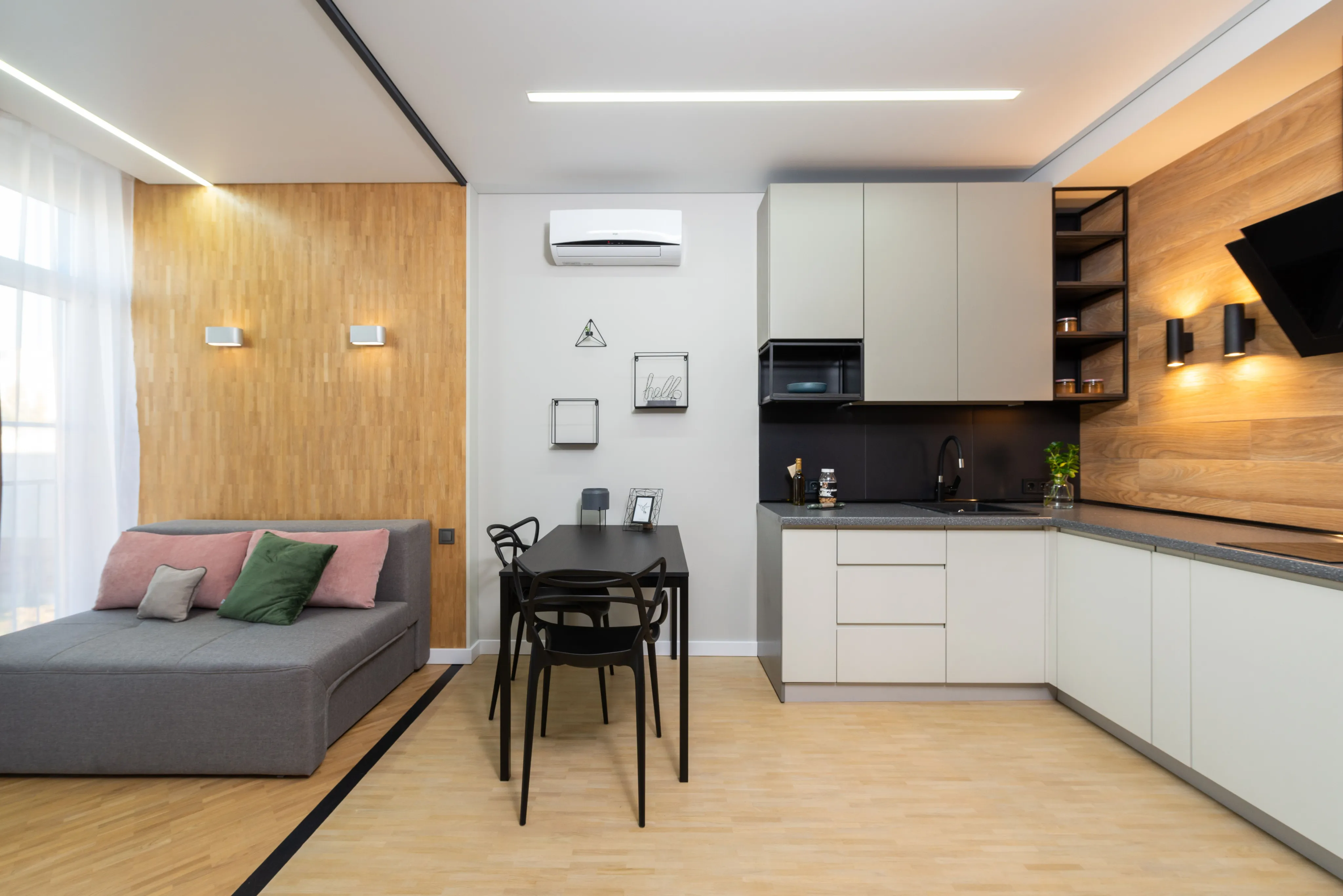
A studio is also one open room, but it leans larger and comes with a real kitchen: a full-size refrigerator, an oven, a stove, and usable counter space. Some studios add an alcove or an L-shaped nook that carves out a sleeping zone. That extra footage makes furniture arrangement easier and leaves room for a guest or two without the space feeling packed. Studios also turn up in nearly every building type, from new mid-rises to converted older properties, which makes them easier to find than true efficiencies.
How Big Is the Average Studio Apt Size?
Size is where the two types clearly part ways. As of 2024, RentCafe and Yardi Matrix data put the national average studio apt size at 457 square feet, up from 444 the year before, which made studios the fastest-growing unit type that year. Most studios land between 400 and 600 square feet. Efficiencies usually run smaller, often 300 to 500 square feet, and some micro layouts dip below 300.
Averages shift by source and city, so treat them as ballparks. The National Association of Realtors has pegged the typical big-city studio closer to 472 square feet, while a dense market like Manhattan averages under 490. When you compare our studio floor plans, check the listed square footage against these ranges to see where each unit falls.
Layout changes how big a unit feels. A wide, open studio can read as roomier than a chopped-up one-bedroom of the same footage, because nothing breaks up the sightlines. Ceiling height matters too. Tall ceilings let a small floor plan breathe and sometimes make room for a loft sleeping area, a feature you will almost never find in an efficiency.
Which Is Cheaper When You Compare Studios and Efficiencies for Rent?
Efficiencies almost always rent for less than studios in the same building, mostly because you get fewer square feet and a smaller kitchen. The gap is real but often modest. When you shop studios and efficiencies for rent, weigh the monthly savings against what you give up in space and cooking power. Here is how the two stack up side by side.
| Feature | Efficiency Apartment | Studio Apartment |
|---|---|---|
| Typical size | 300 to 500 sq ft | 400 to 600 sq ft (avg 457) |
| Kitchen | Kitchenette: mini-fridge, microwave, 1 to 2 burners | Full kitchen: oven, stove, full-size fridge |
| Best for | Solo renter, minimal cooking | Solo renter or occasional guest |
| Monthly rent | Lower | Slightly higher |
| Utility bills | Lowest | Low |
| Bottom line | Cheapest single-room option | More space and a full kitchen |
Rent is only part of the math. Shared spaces stretch a small unit further, so scan the community amenities before you decide. A pool, a fitness center, or a resident lounge effectively adds living space you never pay to heat or cool.
Here is the honest caveat: in plenty of buildings the price gap between the two runs small. When the monthly difference is only a few dollars, the smarter move is to compare layout, natural light, and floor level instead of chasing the cheaper label. A bright corner studio can easily beat a dim efficiency that saves you pocket change.
Frequently Asked Questions
1. Is a studio efficiency the same as a one-room apartment?
Mostly, yes. A studio efficiency is a single open room that holds your living, sleeping, and kitchen areas, with only the bathroom walled off. The label leans toward the smaller, kitchenette end of the range. In real listings, though, agents use "studio" and "efficiency" loosely, so read the full description and photos rather than trusting the name alone.
2. Where can I find an efficiency for rent?
Finding an efficiency for rent takes a little digging, because listings label these units inconsistently. Try these steps:
- Filter by square footage instead of the unit-type label
- Search both "studio" and "efficiency" terms when you browse
- Look closely at kitchen photos, since a mini-fridge signals an efficiency
- Ask the leasing office directly about their smallest floor plans
- Check purpose-built communities where compact units are standard
Because supply tends to be thin, moving quickly on a good listing matters more with efficiencies than with larger units.
3. Is a 1 bedroom efficiency near me a real thing?
Searches for a 1 bedroom efficiency near me are common, but the phrase blends two ideas. A true efficiency has no separate bedroom at all. What people usually mean is a small one-bedroom or a roomy studio with a defined sleeping nook. If a walled-off bedroom matters to you, filter for one-bedrooms. If open-plan is fine, a studio or efficiency will cost less.
4. How does housing efficiency affect utility bills?
Housing efficiency works in your favor here. A smaller footprint takes less energy to heat, cool, and light, so efficiencies and studios usually post lower utility bills than one- or two-bedroom units. Newer buildings pile on more savings with better insulation and updated appliances. Over a full year, those smaller bills can offset part of the rent difference between unit types.
5. Which is better for a single renter?
It depends on how you live. Cook often or own a lot of gear? A studio's full kitchen and extra footage earns its keep. Rarely home, or watching every dollar? An efficiency's lower rent wins. For most solo renters the deciding factors are kitchen needs and budget, not the word on the listing. Tour both if you can, since standing in the actual room tells you more than any square-footage number on a spec sheet.
Conclusion
The Studio vs. Efficiency Apartment choice really comes down to two things: how much you cook and how much space you need. Efficiencies save you money with a kitchenette and a tighter footprint. Studios give you a full kitchen and room to breathe for a little more each month. Both keep utilities low and upkeep simple. If you are weighing your options, take a look at the property's Northwest Houston location and tour a few layouts before you sign.