
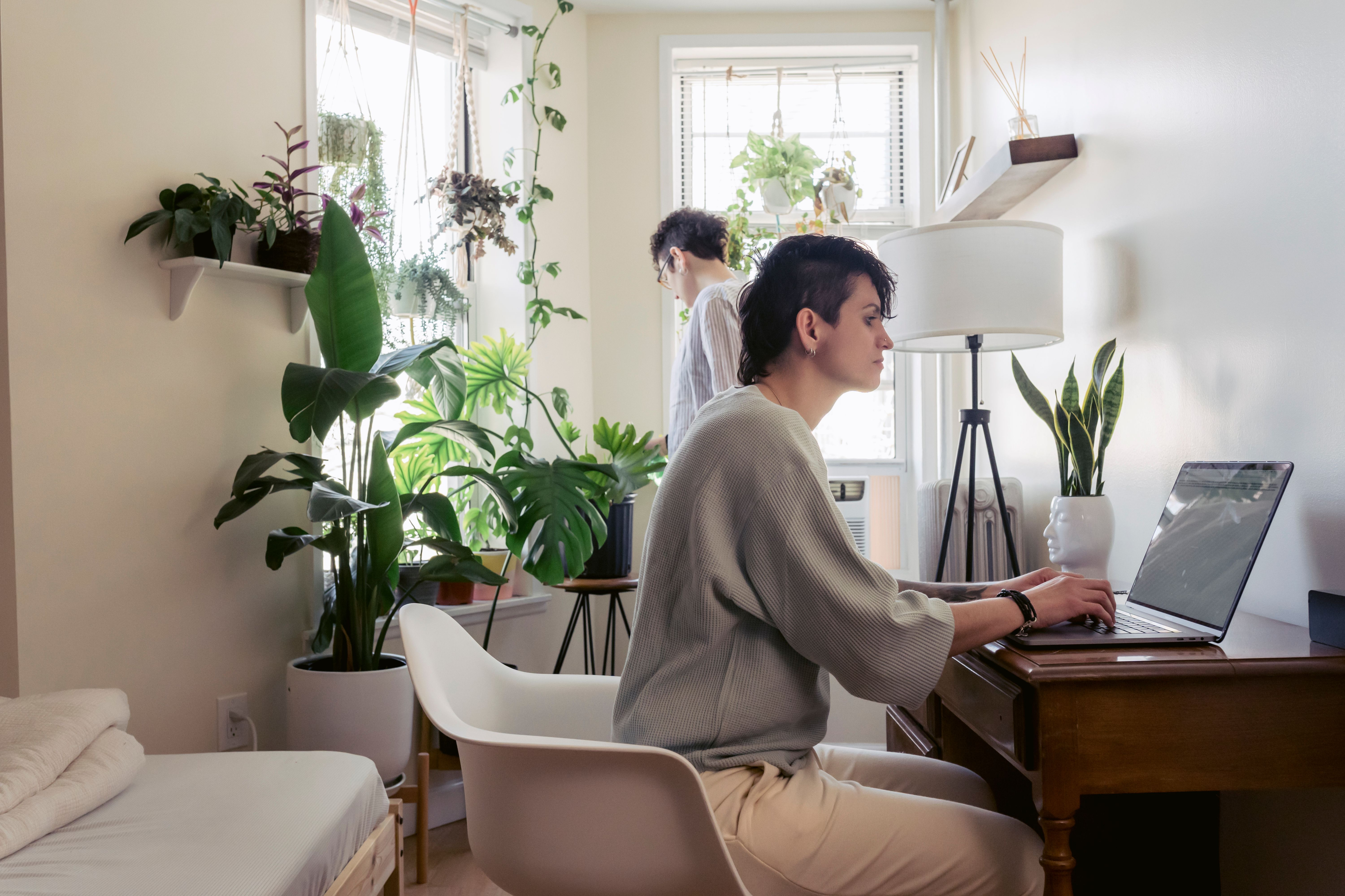
Quick Answer: Can two people share a studio? In most cases, yes. Federal fair housing guidance treats two people per bedroom as reasonable, and Texas law permits up to three adults per bedroom. The binding limits are usually your lease, the unit's square footage, and the local housing code, not federal law.
Two adults in 500 square feet sounds cramped until you price the one-bedroom next door. Plenty of couples do it anyway. So can two people share a studio without breaking a rule? Legally, almost always. Practically, it depends on the floor plan and the lease. Renters along the US-290 corridor can start with the studio floor plans at The Reserve at Rye 290 in northwest Houston.
What Apartment Rental Guidelines Say About Studio Occupancy
Apartment rental guidelines on occupancy come from four stacked layers: federal fair housing policy, state statute, local building code, and the community's own written policy. Each sets a ceiling. The lowest defensible ceiling wins, and that is almost never the federal one.
How Maximum Occupancy Is Calculated
The number most leasing offices quote traces back to a 1991 memo from HUD's general counsel, Frank Keating, which Congress directed HUD to adopt as agency policy in 1998. It says an occupancy policy of two persons in a bedroom is, as a general rule, reasonable under the Fair Housing Act. That phrase does a lot of work. Maximum occupancy under the memo is a starting point, not a safe harbor. HUD weighs the size of the sleeping area, the overall size of the unit, and the ages of any children before calling a policy reasonable.
Texas is more generous. Under Section 92.010 of the Texas Property Code, a landlord may allow up to three adults per bedroom, and "adult" means anyone 18 or older. Children do not count toward that cap. A studio counts as one sleeping area, so can two people share a studio under Texas law? Easily. State law would tolerate a third adult. Almost no operator goes that far.
Where Square Footage Overrides the Bedroom Count
Bedroom math breaks down in a studio, because there is no separate bedroom to count. Local codes use area minimums instead. Most Texas cities model their rules on the International Property Maintenance Code, which requires a clear floor area of at least 120 square feet for an efficiency unit with one occupant and at least 220 square feet for two. So the code answer to can two people share a studio is a square footage test, not a bedroom test.
Those thresholds are low. As of August 2026, RentCafe put the average Houston studio at 509 square feet, renting near $1,011 a month. That size clears the two-occupant minimum with more than twice the required area to spare. Other trackers report different figures for the same month, so treat any single number as a benchmark rather than a quote.
Can Two People Share a Studio Under Fair Housing Occupancy Limits?
Yes. Fair housing occupancy limits are designed to stop landlords from using occupancy caps as a quiet way to exclude families with children. A policy allowing two adults in a studio sits comfortably inside what HUD considers reasonable. A policy capping a studio at one person is the one that draws scrutiny, especially when it is enforced against a parent and infant but not against two unrelated adults.
| Rule source | What it sets | Effect on a two-person studio |
|---|---|---|
| HUD fair housing policy | Two persons per bedroom is generally reasonable, judged case by case | Two adults normally pass without question |
| Texas Property Code 92.010 | Up to three adults per bedroom; minors excluded from the count | State law is not the constraint for a couple |
| Local property maintenance code | Roughly 220 square feet of clear floor area for two occupants | Most studios over 400 square feet clear it easily |
| Lease and community policy | Names each occupant and caps the total | This is the document that actually decides |
One caveat: a community can follow local law to the letter and still face a complaint. HUD reviews the effect of a policy, not only its wording, including whether a rule gets enforced differently for households with children. Ask for the written occupancy section before you apply, alongside the community amenities list.
What Apartment Rules and Lease Terms Actually Require
Apartment rules turn a legal maximum into a specific number for your unit. The lease lists every approved occupant by name, sets an occupancy limit for the floor plan, and defines how long a visitor can stay before becoming an occupant. Signing without reading that section is where most trouble starts.
House Rules for Tenants Renting a Room or Sharing a Space
House rules for tenants renting a room usually cover quiet hours, parking, package handling, and shared laundry. In a studio, the practical rules matter more than the legal ones. Two people, one bathroom, one closet, no door between the bed and the kitchen. Couples who make it work agree on a schedule before they sign.
- Both names on the lease, so both build rental history and both are liable for rent
- A written split for rent, utilities, and renters insurance
- Agreement on overnight guests, since the guest policy applies to both of you
- A plan for what happens if one person moves out mid-term
Guests Versus Occupants
Most Texas leases convert a guest into an unauthorized occupant somewhere between 7 and 14 consecutive days, though the exact number varies by property. Can two people share a studio when only one name is on the lease? Not for long. Adding the second person properly takes an application, a screening, and a lease amendment, usually a few days.
Frequently Asked Questions
1. What is the max occupancy for a studio apartment?
Max occupancy for a studio is typically two people, set by the lease rather than by statute. The number a community lands on reflects several inputs:
- Federal guidance of two persons per sleeping area
- State law, which in Texas allows up to three adults per bedroom
- Local code minimums tied to clear floor area
- Parking, utility, and building system capacity
2. Do rental occupancy limits count children?
Not in Texas. Section 92.010 counts adults only, defined as anyone 18 or older. Federal fair housing law goes further and prohibits rental occupancy limits that are written or enforced in a way that pushes out families with children. A cap on the number of children in a unit is far riskier than a cap on total people.
3. What happens if you exceed the occupancy limit?
Exceeding the occupancy limit written in your lease is a lease violation. The usual sequence is a written notice, a cure period, and then termination if the extra occupant stays. Texas also lets a neighboring owner or tenant sue a landlord who allows illegal overcrowding, with a $500 penalty per violation available to the plaintiff.
4. How do occupancy rules for rental housing treat long-term guests?
Occupancy rules for rental housing draw the line at consecutive nights. A weekend visitor is a guest. Someone receiving mail at your address, keeping clothes there, and staying a month is an occupant, whatever the lease calls them. Add them formally through the office instead of hoping nobody notices.
5. Can a landlord refuse when two people want to share a studio?
A landlord can set a one-person cap, but that policy invites scrutiny under the Fair Housing Act, particularly if it screens out a parent with a child. Most operators avoid the risk and allow two. Ask during your tour and get the answer in writing before you apply.
The Bottom Line on Sharing a Studio
Can two people share a studio? Yes, in nearly every U.S. market, and Houston is no exception. Federal guidance supports it, Texas law is more permissive still, and code minimums for a two-occupant efficiency unit sit far below the size of a typical Houston studio. Read the occupancy clause, put both names on the lease, and confirm the guest policy before move-in. Weighing a shared studio in the Fairbanks and Northwest Crossing area? Check the neighborhood map and directions, then ask the office at The Reserve at Rye 290 for the occupancy standard on each floor plan.
Federal references: the HUD Fair Housing Act overview and the regulatory text at 24 CFR Part 100.